Continue with Facebook
 Continue with Email

Table of Contents
- What Is a Property Valuation?
- Why Does a Property Valuation Matter?
- What Should You Give Your Property Valuer?
- What Happens During a Property Valuation?
- Asking Price Is Not the Same as Market Value
- Location Still Matters
- How Do You Check That a Property Valuer Is Legitimate?
- Red Flags to Watch Out For
- What Should a Good Property Valuation Report Tell You?
- Property Valuation vs Property Appraisal vs Asking Price
- A Valuation Is a Snapshot, Not a Guarantee
- The Investor's Valuation Checklist
- Final Word: Do Your Due Diligence
How much is your property really worth? Here's what to prepare, what the valuer does, and how to make sure you're dealing with a legitimate professional.
Imagine you are selling a house in Borrowdale. One person tells you it is worth US$450,000. Another says US$550,000. An agent suggests you list it at US$600,000. Who is right?
This is where a professional property valuation becomes important. A valuation is more than someone walking through your house, looking at the finishes and giving you a number. A proper valuation considers the property, its legal interest, location, comparable evidence, market conditions and the purpose for which the valuation is required.
And in Zimbabwe's increasingly sophisticated property market, knowing how the process works can save buyers, sellers and investors significant time and money.
What Is a Property Valuation?
A property valuation is a professional assessment of the value of an interest in immovable property. The important word is interest.
The valuer may be assessing:
- A freehold property.
- A leasehold interest.
- Land.
- A residential property.
- Commercial property.
- Industrial property.
- Development land.
- Investment property.
- Property forming part of a deceased estate.
The purpose of the valuation also matters. A valuation for a sale may differ from one required for:
- Mortgage financing.
- Estate administration.
- Insurance.
- Taxation.
- Transfer purposes.
- Financial reporting.
- Investment analysis.
- Litigation.
- Rental or lease purposes.
Zimbabwe's Valuers Act [Chapter 27:18] defines valuation of immovable property as the preparation of a written estimate of the value of immovable property and provides for the registration and regulation of valuers.
Why Does a Property Valuation Matter?
For sellers, valuation can help answer: “What is a defensible market value for my property?”
For buyers: “Am I paying a reasonable price?”
For investors: “Does this property make financial sense at this price?”
For lenders: “What is the underlying value of the property supporting the financing?”
And for estates: “What was the property worth for purposes of administering the estate?”
A valuation therefore provides an important independent reference point. It does not, however, automatically mean that a property will sell at exactly that amount.
The final transaction price can be influenced by:
- Supply and demand.
- Negotiating power.
- Property condition.
- Urgency of the seller.
- Availability of financing.
- Buyer demand.
- Location.
- Market sentiment.
- Timing.
What Should You Give Your Property Valuer?
The smoother the information gathering process, the easier it is for the valuer to do their job. Before the valuation, prepare as much of the following as is available.
1. Proof of ownership
Depending on the property, this may include:
- Title deed/deed of transfer.
- Lease agreement.
- Agreement of sale.
- Allocation documents.
- Other documentation evidencing the relevant property interest.
Do not assume that the valuer can simply rely on what you tell them. The legal status and nature of the interest being valued matter.
2. Property address and details
Provide:
- Physical address.
- Stand/erf number where applicable.
- Property description.
- Land size.
- Building size, if known.
- Number of bedrooms and bathrooms.
- Garages and ancillary structures.
- Any recent improvements.
3. Relevant property documents
Where applicable, provide:
- Approved building plans.
- Lease documents.
- Development approvals.
- Servitude information.
- Existing valuations.
- Relevant municipal documentation.
- Other documents relating to the property.
4. State the purpose of the valuation
This is critical. Tell the valuer whether the valuation is required for:
- Sale.
- Purchase.
- Mortgage.
- Estate/probate.
- Insurance.
- Tax.
- Investment.
- Litigation.
- Rental/lease purposes.
Don't simply ask: “How much is my house worth?” Explain why you need the valuation.
What Happens During a Property Valuation?
A professional valuation normally involves considerably more than the physical inspection. A simplified process looks like this:
Step 1: Initial consultation
You explain:
- What property is being valued.
- What interest is being valued.
- Why the valuation is required.
- Who requires the report.
- Any relevant deadlines.
Step 2: Scope and quotation
The valuer establishes the scope of work and provides the applicable fee/quotation and requirements.
Step 3: Documentation
The relevant ownership and property information is provided.
Step 4: Property inspection
The valuer physically inspects the property.
They may assess:
- Location.
- Land size.
- Building configuration.
- Accommodation.
- Construction quality.
- Condition.
- Improvements.
- Services.
- Access.
- Surrounding environment.
- Development potential.
Step 5: Market research
The valuer considers relevant market evidence and other information appropriate to the assignment.
This is where professional valuation differs from simply looking at asking prices online.
Step 6: Analysis and valuation
The valuer analyses the evidence and applies an appropriate valuation methodology.
Step 7: Valuation report
The findings are documented in a formal report stating the relevant basis, assumptions, methodology and concluded value.
Asking Price Is Not the Same as Market Value
This is one of the biggest misconceptions property buyers and sellers should understand.
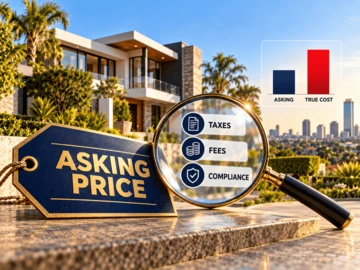
A property advertised at US$500,000 is not necessarily worth US$500,000. It may simply be the seller's asking price. Similarly, a property listed at US$400,000 does not necessarily represent a bargain.
This distinction is particularly important in Zimbabwe because publicly available property market information often reflects asking prices rather than completed transaction prices.
For example, current Property.co.zw data shows that the average asking rent for houses in Harare is around US$1,100 per month, with significant differences by location: approximately US$2,500 in Harare North compared with US$775 in Harare South and US$375 in high density areas.
That illustrates an important principle:
Property markets are not homogeneous. Two houses in the same city can have dramatically different values.
Location Still Matters
Location remains one of the strongest drivers of property value.
Factors can include:
- Proximity to major employment centres.
- Schools.
- Shopping and amenities.
- Road infrastructure.
- Security.
- Water availability.
- Electricity reliability.
- Internet connectivity.
- Public transport.
- Neighbourhood quality.
- Development activity.
- Future infrastructure.
For investors, the question should therefore not simply be: “What does this property cost?”
It should be: “What does this property offer at this price, relative to comparable properties and its income potential?”
How Do You Check That a Property Valuer Is Legitimate?
This is arguably one of the most important parts of the process. Zimbabwe's Valuers Act [Chapter 27:18] establishes the Valuers Council and provides for a register of valuers. The legislation states that a person may not practise as a valuer unless registered under the Act.
Before instructing someone, ask:
Are they registered?
Request their:
- Full professional name.
- Registration details/number.
- Professional credentials.
Can their registration be independently verified?
Do not rely solely on a social media profile, business card or WhatsApp message.
Are they experienced in the type of property you need valued?
Valuing:
- A residential house,
- A shopping centre,
- A commercial building,
- Development land,
can involve very different considerations.
Do they provide a written scope and report?
You should understand:
- What is being valued.
- For what purpose.
- What work is included.
- The expected deliverable.
- The applicable fee.
The Valuers Council has statutory responsibilities relating to the competence and conduct of valuers, including disciplinary processes.
Red Flags to Watch Out For
Be cautious if someone:
🚩 Cannot demonstrate professional registration.
🚩 Gives you a valuation without properly inspecting the property when an inspection is appropriate.
🚩 Guarantees that your property will sell at their valuation.
🚩 Bases the valuation entirely on online asking prices.
🚩 Cannot explain the purpose or basis of the valuation.
🚩 Pressures you to make an immediate payment without clear terms.
🚩 Refuses to provide a written quotation or engagement terms.
🚩 Produces a report with little explanation of the methodology or assumptions.
The cheapest valuation is not necessarily the best valuation. The most expensive valuation isn't automatically the best either. Credentials, methodology, independence and the quality of the report matter more.
What Should a Good Property Valuation Report Tell You?
Depending on the assignment, look for clear information around:
- Property identification.
- Ownership or interest being valued.
- Purpose of valuation.
- Inspection date.
- Valuation date.
- Property description.
- Location.
- Improvements.
- Condition.
- Relevant market evidence.
- Methodology.
- Assumptions and limitations.
- Basis of value.
- Concluded value.
- Valuer's professional details.
If something important is unclear, ask the valuer to explain it.
Property Valuation vs Property Appraisal vs Asking Price
These terms are sometimes used interchangeably, but consumers should be careful.
Property valuation
A formal professional opinion of value undertaken within an appropriate professional and regulatory framework.
Agent's appraisal
An estate agent's opinion of a likely selling price, generally informed by market experience, comparable listings and expected buyer demand.
Asking price
The price at which the seller chooses to advertise the property. They can all be useful. But they are not necessarily the same thing.
A Valuation Is a Snapshot, Not a Guarantee
Property values change. A valuation reflects the circumstances, evidence and assumptions relevant to the valuation date and purpose.
Changes in:
- Interest rates.
- Exchange rates.
- Inflation.
- Construction costs.
- Buyer demand.
- Infrastructure.
- Regulation.
- Neighbourhood development.
- Economic conditions,
can all affect property values.
This is particularly important for investors. A valuation tells you what the property is worth under the specified valuation circumstances. It does not guarantee what it will be worth five years from now.
The Investor's Valuation Checklist
If you are buying property as an investment, don't stop at the valuation figure. Ask:
Purchase
- What is the asking price?
- What is the estimated market value?
- How does the price compare with similar properties?
Income
- What rent could the property realistically achieve?
- What is the vacancy risk?
- What are the operating costs?
- What is the expected net yield?
Capital growth
- What has happened to values in the area?
- What infrastructure is being developed?
- Is demand increasing?
Risk
- Is the property legally transferable?
- Are there encumbrances?
- Are services reliable?
- Are there outstanding municipal issues?
- Is the property appropriately zoned?
Exit
- Who is likely to buy this property from me?
- How liquid is the market?
- How long might it take to sell?
The best investment isn't necessarily the cheapest property. It is the property where price, income, risk and future demand make sense together.
Final Word: Do Your Due Diligence
A property valuation should be viewed as one part of a broader property due diligence process.
Before buying or selling, consider obtaining appropriate professional advice from:
- A registered property valuer.
- A registered estate agent.
- A qualified conveyancer/notary.
- Relevant local authority departments.
- A financial adviser or accountant where appropriate.
And remember:
A valuation is not simply about putting a number on a house.
It is about establishing a defensible view of value based on the property, its legal interest, its characteristics, its market and the purpose for which the valuation is required.
In a market where asking prices can vary significantly, independent professional advice can give buyers, sellers and investors something extremely valuable:
confidence in the number they are making decisions around.