Continue with Facebook
 Continue with Email

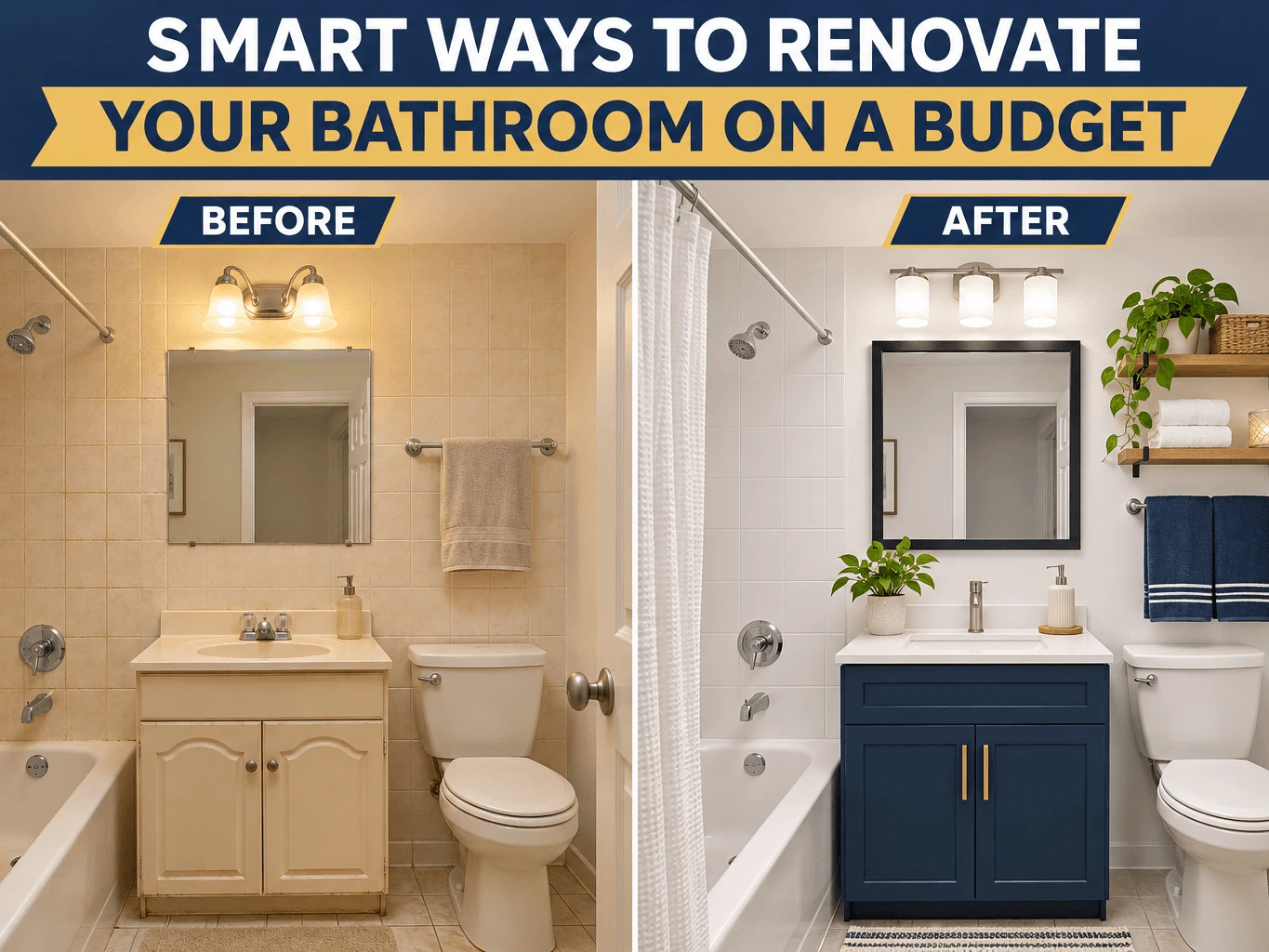
Table of Contents
- 1. Keep the existing plumbing layout if possible
- 2. Spend money on waterproofing not expensive finishes
- 3. Refresh only what needs replacing
- 4. Choose a shower tray instead of building a custom shower floor
- 5. Don't tile every wall from floor to ceiling
- 6. Choose locally available materials where possible
- 7. Buy complete sets and standard size fittings
- 8. Save on labour but only where it is safe
- A simple budget bathroom renovation plan
- Where should you never cut costs?
- How much does a budget bathroom renovation cost in Zimbabwe?
- Budget carefully for changing material prices
- The biggest budget bathroom mistakes to avoid
- Will a budget bathroom renovation add value to your property?
- Final thoughts: Affordable does not have to look cheap
A new bathroom does not have to come with a frightening price tag. You have probably seen the dream bathrooms online.
The walk in shower. The freestanding bathtub. The floating vanity. The floor to ceiling tiles. Then you start adding up the costs. Tiles. Plumbing. Taps. Labour. Waterproofing. Lighting. A new vanity.
Suddenly, what looked like a simple bathroom makeover has become a major renovation project. But here is the good news: You do not need an unlimited budget to create a bathroom that looks modern, feels comfortable and adds appeal to your home. The secret is knowing where to spend and where to save.
In Zimbabwe, this is particularly important because bathroom renovation costs can quickly increase when homeowners move plumbing, import fittings or discover hidden problems after demolition. Recent Property.co.zw renovation guidance estimates that a full bathroom remodel can cost from around US$2,500 to US$5,000, depending on the size, scope and finishes, with more complex projects costing significantly more.
The smartest budget renovation is not necessarily the cheapest one.
It is the one that avoids unnecessary costs while protecting the things you cannot afford to get wrong.
Here are eight practical ways to renovate your bathroom on a budget in Zimbabwe.
1. Keep the existing plumbing layout if possible
This is often where homeowners can save the most money. If your existing bathroom layout works reasonably well, think twice before moving:
- The toilet
- The shower
- The bathtub
- The basin
Moving plumbing can mean:
- Breaking floors
- Opening walls
- Extending water pipes
- Moving drainage
- Repairing concrete or screeds
- Retiling larger areas
What initially looks like a simple design change can quickly become a major construction project.
A cheaper approach
Keep the:
- Toilet where it is
- Shower in roughly the same location
- Basin plumbing in place
Then modernise the visible elements.
For example, you can transform the look of the bathroom by replacing:
- The vanity
- Taps
- Mirror
- Shower screen
- Lighting
- Tiles
Changing the look is usually far cheaper than changing the infrastructure.
2. Spend money on waterproofing not expensive finishes
This may not sound exciting. But it may be the most important money you spend. Poor waterproofing can lead to:
- Damp walls
- Mould
- Ceiling damage
- Peeling paint
- Tile failure
- Expensive repairs
This is not an area to cut corners.
If your budget is tight, prioritise:
- Plumbing
- Drainage
- Waterproofing
- Electrical safety
- Then finishes
It is better to have a mid range vanity in a properly waterproofed bathroom than a luxury vanity sitting in a room with a hidden leak.
Save on what you can replace easily. Don't save on what will be buried behind walls and tiles.
3. Refresh only what needs replacing
You may not need to demolish the entire bathroom. Take a step back and assess what is actually wrong.
Can you keep:
- The existing bathtub?
- The toilet?
- The basin?
- The wall tiles?
- The plumbing layout?
If an item is structurally sound and functional, replacing it may not be necessary.
A simple refresh could include:
- Regrouting tiles
- Replacing old silicone
- Painting the ceiling
- Changing the mirror
- Installing new taps
- Upgrading the shower head
- Replacing cabinet handles
- Improving lighting
Sometimes the bathroom does not need a complete renovation. It needs a smart facelift.
Property.co.zw's 2026 home improvement guidance highlights small repairs and cosmetic improvements as cost effective ways to improve a property's appearance and buyer appeal without undertaking a full scale renovation.
4. Choose a shower tray instead of building a custom shower floor
A fully tiled walk in shower can look spectacular. But it can also increase costs. A custom shower floor may require:
- More floor preparation
- Waterproofing
- Screeding
- Drainage adjustments
- Additional tiling labour
A quality shower tray can offer a more affordable alternative.
Advantages include:
- Faster installation
- Less tiling
- Lower labour requirements
- Easier replacement
- A clean, modern appearance
Low profile shower trays can also create a contemporary look similar to a walk in shower without requiring the same level of custom construction.
Before choosing, make sure the drainage system is properly planned. The shower may save money. A badly installed drain will not.
5. Don't tile every wall from floor to ceiling
Tiles are expensive. And the cost is not only the tile itself. You also need to pay for:
- Adhesive
- Grout
- Cutting
- Labour
- Wastage
One way to reduce costs is to tile strategically.
Consider full height tiles only in wet areas such as:
- The shower
- Around the bathtub
For other walls, you could use:
- Quality moisture resistant paint
- Partial height tiling
- Suitable wall panels
This can significantly reduce the total amount of material and labour required.
Another smart option
Create one feature wall. For example:
- Use premium tiles in the shower
- Use a more affordable complementary tile elsewhere
This creates visual impact without using the most expensive material across the entire bathroom.
6. Choose locally available materials where possible
Imported fittings can be attractive. But they can also increase the total cost through:
- Higher purchase prices
- Shipping
- Import costs
- Longer lead times
- Difficulty finding replacement parts
A more budget conscious approach is to investigate quality products that are:
- Available locally
- Easy to replace
- Supported by local suppliers
- Compatible with locally available plumbing fittings
This does not mean choosing poor quality materials. It means choosing intelligently.
Before buying, ask:
- Are spare parts available in Zimbabwe?
- Can the cartridge be replaced?
- Is the fitting compatible with standard local plumbing?
- What happens if it leaks?
- Is there a warranty?
A cheaper imported tap can become expensive if one small replacement part is impossible to find.
7. Buy complete sets and standard size fittings
Mixing and matching individual products can create a highly customised bathroom. But it can also increase costs. Where possible, consider complete sets for:
- Vanity units and basins
- Toilets and cisterns
- Shower enclosures
- Taps and accessories
Complete sets can offer better value because the components are designed to work together.
Standard sizes can also save money.
Custom made products generally cost more. For example, choosing a standard vanity size may be more affordable than commissioning custom cabinetry. The same applies to:
- Shower screens
- Mirrors
- Doors
- Basins
Before ordering anything custom, ask:
Can a standard product solve the same problem? If the answer is yes, it may save you a significant amount.
8. Save on labour but only where it is safe
There are some tasks that a capable homeowner may be able to handle. For example:
- Removing accessories
- Painting
- Installing simple shelves
- Fitting towel rails
- Demolition under professional guidance
- Basic cosmetic preparation
But there are jobs you should not treat as DIY experiments.
Use qualified professionals for:
- Electrical work
- Major plumbing
- Drainage
- Waterproofing
- Structural alterations
A poorly installed tap may leak. A poorly installed waterproofing system may destroy part of your house. Know the difference between saving money and creating a future repair bill.
A simple budget bathroom renovation plan
If your budget is limited, divide the project into three categories.
Category 1: Non negotiable
Spend properly on:
- Plumbing
- Drainage
- Waterproofing
- Electrical safety
- Leak repairs
Category 2: Value for money
Choose carefully:
- Mid range tiles
- Standard size vanities
- Locally supported taps
- Durable shower trays
- Efficient toilets
Category 3: Optional luxury
Add only if your budget allows:
- Freestanding baths
- Imported fittings
- Custom cabinetry
- Heated flooring
- Premium natural stone
- Smart mirrors
- Complex lighting systems
This approach ensures that the essentials are completed before the budget is spent on luxuries.
Where should you never cut costs?
There are some bathroom costs that should be treated as investments rather than expenses. Do not compromise on:
Waterproofing
A leak behind the tiles can be expensive to repair.
Drainage
Poor drainage can cause long term problems.
Electrical safety
Bathrooms and electricity require proper installation.
Quality plumbing fittings
Constantly replacing cheap taps can cost more over time.
Skilled workmanship
Good workmanship can protect the entire renovation.
The goal is not to buy the cheapest product. The goal is to achieve the lowest total cost over the life of the bathroom.
How much does a budget bathroom renovation cost in Zimbabwe?
The final cost depends on several factors, including:
- Bathroom size
- Existing condition
- Whether plumbing is moved
- Type of tiles
- Choice of fittings
- Labour costs
- Whether structural work is required
Recent Property.co.zw renovation guidance suggests that a complete bathroom remodel can range from approximately US$2,500 to US$5,000, although a lighter cosmetic refresh can cost considerably less, while premium or complex renovations can exceed this range.
A homeowner with a limited budget could focus on a phased approach.
Phase 1
Fix:
- Leaks
- Plumbing
- Waterproofing
- Broken tiles
Phase 2
Upgrade:
- Vanity
- Taps
- Mirror
- Lighting
Phase 3
Add:
- Premium finishes
- Accessories
- Decorative features
You do not always need to do everything at once.
Budget carefully for changing material prices
A renovation quote should never be treated as the only number you need. Material prices can change. Additional work can be discovered. Older homes can reveal hidden plumbing or structural problems once demolition begins.
Zimbabwe's latest available official price data reported weighted year on year inflation of 3.2% in July 2026, while ZIMSTAT's Building Materials Price Index continues to track movements in the cost of construction materials. This makes it sensible to obtain current quotations close to the start of your project.
A good budget should include:
- Materials
- Labour
- Transport
- Plumbing
- Electrical work
- Waterproofing
- Waste removal
- A contingency
For an older property, a contingency of around 10%–20% may be sensible, depending on the condition of the existing bathroom and the scope of the renovation.
The biggest budget bathroom mistakes to avoid
1. Moving everything unnecessarily
Keep the plumbing layout if it works.
2. Buying cheap fittings that fail quickly
Low purchase price does not always mean low long term cost.
3. Skipping waterproofing
This can become one of the most expensive mistakes.
4. Ordering materials without accurate measurements
Always measure properly and allow for reasonable wastage.
5. Spending too much on one luxury item
A premium bathtub may consume a large part of the budget.
6. Starting work without a clear scope
This can lead to constant "extra costs".
7. Hiring based only on the cheapest quote
Compare what is actually included.
8. Forgetting the hidden costs
Demolition, delivery, plumbing and rubble removal can all add up.
Will a budget bathroom renovation add value to your property?
It can. But the goal should not simply be to spend money. The goal is to make the property more appealing. A clean, modern and functional bathroom can improve how buyers perceive the entire home.
Property.co.zw's renovation guidance identifies bathroom upgrades among the improvements that can contribute to stronger buyer appeal and potentially deliver attractive returns when the investment is appropriate for the property's market.
Buyers notice immediately if a bathroom has:
- Visible leaks
- Broken tiles
- Old or damaged fittings
- Poor lighting
- Dampness
- Mould
- Cracked sanitary ware
Fixing these issues can make a significant difference without necessarily requiring a luxury renovation. A US$4,000 well planned bathroom can sometimes make more sense than a US$15,000 bathroom that overcapitalises the property.
Final thoughts: Affordable does not have to look cheap
A limited budget can actually force you to make better decisions. Instead of buying everything, focus on what matters most.
- Keep the layout.
- Repair the infrastructure.
- Waterproof properly.
- Choose durable materials.
- Use standard sizes.
- Spend on quality where failure would be expensive.
- Then add style through carefully chosen finishes.
The smartest budget bathroom is not the one where you spend the least. It is the one where every dollar has a purpose.