Continue with Facebook
 Continue with Email

Table of Contents
- What’s Really Going On Here?
- Is This a Legal Issue?
- The Financial Reality Check
- Property Insight: Renovations Don’t Always Increase Value
- Why One Partner Wants It More Than the Other
- Psychological Driver: “Keeping Up With the Joneses”
- Practical Solutions That Actually Work
- Property Expert Insight (Zimbabwe Context)
Home ownership is meant to bring stability… until someone discovers Instagram.
A Property.co.zw reader asks:
“My wife insists we renovate the entire house so it looks like our friends’ homes, but we simply cannot afford it. What should we do?”
This is less a construction problem and more a financial psychology and household priorities conflict one that is increasingly common in modern urban living.
What’s Really Going On Here?
Before discussing paint colours and new sofas, it helps to decode the underlying issue.
This is typically driven by three forces:
- Social comparison (“keeping up with neighbours”)
- Identity signaling (home as status symbol)
- Digital influence (Instagram / Pinterest / TikTok homes)
In property psychology terms, the home becomes a proxy for success, not just a place to live.
Is This a Legal Issue?
No. There is no property law in Zimbabwe including under:
- Matrimonial Causes Act
that forces either spouse to renovate a home for aesthetic or social reasons. This is purely a household financial decision, not a legal obligation.
The Financial Reality Check
Renovations in Zimbabwe can vary widely:
- Basic cosmetic upgrades: US$2,000 – US$10,000+
- Kitchen remodel: US$5,000 – US$25,000+
- Full home refurbishment: US$20,000 – US$100,000+
For most households, a full renovation competes directly with:
- school fees
- transport costs
- mortgage repayments
- emergency savings
So the real question is: Are you renovating for value or for appearance?
Property Insight: Renovations Don’t Always Increase Value
Not all upgrades improve resale value. In the Zimbabwe property market:
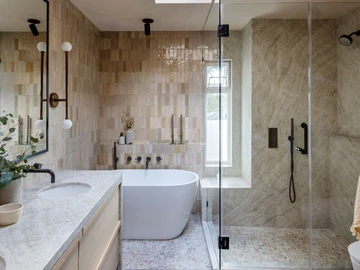
- Kitchens and bathrooms = highest ROI
- Cosmetic luxury upgrades = often low resale return
- Over-customisation = may reduce buyer pool
So “keeping up with the Joneses” can sometimes become:
“spending more to impress people who won’t pay you back.”
Why One Partner Wants It More Than the Other
This type of disagreement is extremely common in households. Typically:
Partner A (Practical View)
- Focuses on affordability
- Prioritises savings and essentials
- Views home as functional asset
Partner B (Aspirational View)
- Associates home with pride and identity
- Responds to social comparison pressure
- Sees home as emotional expression
Neither is “wrong” they are just operating from different value systems.
Psychological Driver: “Keeping Up With the Joneses”
This phenomenon is not uniquely Zimbabwean it is universal. It is amplified by:
- social media exposure
- peer pressure from friends’ homes
- lifestyle inflation
- cultural expectations of “success appearance”
In behavioural economics, this is linked to relative consumption bias where satisfaction depends less on what you own, and more on what others appear to own.
Practical Solutions That Actually Work
Instead of a full renovation vs. no renovation deadlock, consider structured compromise:
1. Phase the Renovation
Start small:
- repaint one room
- update lighting
- improve cluttered spaces
2. Prioritise High-Impact Areas
Focus on:
- kitchen refresh
- living room layout
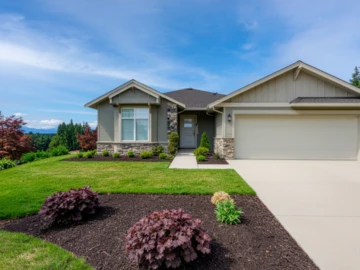
- curb appeal (front yard/garden)
3. Set a Fixed Budget Ceiling
Agree in advance:
- “We will not exceed US$X this year”
This removes emotional escalation during spending decisions.
4. Redefine the Goal
Shift from: “Make it look like our friends’ houses”
to: “Make it comfortable, functional, and financially safe”
Property Expert Insight (Zimbabwe Context)
Property.co.zw market behaviour shows:
- Buyers prioritise structure and location over luxury interiors
- Over-renovated homes often sit longer on the market if priced incorrectly
- Practical improvements outperform aesthetic excess in resale decisions
In other words: Homes sell on fundamentals not social comparison.
Property Expert Takeaway
This is not really about tiles, sofas, or bathrooms.
It is about:
- financial boundaries
- identity and self-image
- social pressure
- and long-term household stability
The healthiest property decisions are rarely the most expensive ones they are the most intentional and aligned with reality.