Continue with Facebook
 Continue with Email


Table of Contents
- 1. Why Diaspora Buyers Are Driving Zimbabwe's Property Market
- 2. Verify That the Seller Is the Legal Owner
- 3. Confirm the Property Has a Valid Title
- 4. Work With a Registered Estate Agency
- 5. Appoint Your Own Conveyancing Lawyer
- 6. Confirm Municipal Rates and Utility Accounts
- 7. Visit the Property or Arrange an Independent Inspection
- 8. Understand Exactly What You're Buying
- 9. Check for Existing Occupants
- 10.Be Alert to Property Fraud
- 11 Understand All the Costs
- 12.Think Beyond Today's Purchase
- 13.Protect Yourself Against Scams
For many Zimbabweans living abroad, owning property back home is more than an investment it's a dream, a retirement plan, and a way to stay connected to family and country.
Yet buying property from thousands of kilometres away comes with unique risks. Every year, some diaspora buyers lose money to fraud, purchase properties with unresolved legal issues, or discover that the home they paid for isn't what they expected.
The good news? Most of these problems are avoidable with the right due diligence.
Whether you're buying your first home, investing in rental property, or building your retirement home, here's what every Zimbabwean in the diaspora should check before signing an Agreement of Sale.
Why Diaspora Buyers Are Driving Zimbabwe's Property Market
Zimbabwe's diaspora community continues to play a significant role in the country's real estate sector.
According to the Reserve Bank of Zimbabwe (RBZ), diaspora remittances consistently exceed US$2 billion annually, making them one of the country's largest sources of foreign currency. A significant proportion of these funds goes towards housing, land purchases, construction, and family property investments.
At the same time, Property.co.zw continues to see strong demand from buyers based in the United Kingdom, South Africa, Australia, Canada, the United States, New Zealand and across the wider diaspora.
With demand growing, so too has the need for careful due diligence.
1. Verify That the Seller Is the Legal Owner
Before paying a deposit, confirm that the person selling the property has the legal authority to do so.
Ask for:
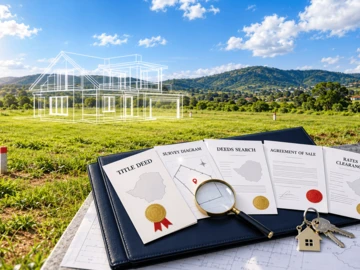
- A copy of the Title Deed (where applicable).
- National identity documents.
- Company documents (if the seller is a company).
- Proof of authority if someone is selling on behalf of another person.
Never rely solely on verbal assurances or social media advertisements.
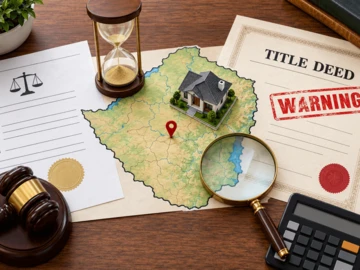
2. Confirm the Property Has a Valid Title
One of the first questions every buyer should ask is:
"What type of ownership am I buying?"
Depending on the property, ownership may involve:
- Freehold title.
- Sectional title.
- Leasehold rights.
- Developer cession or other contractual rights.
Ask your conveyancer to explain exactly what rights you are acquiring before committing to the purchase.
3. Work With a Registered Estate Agency
Buying through a reputable estate agency significantly reduces risk.
A professional agency should:
- Verify ownership.
- Facilitate negotiations.
- Coordinate viewings.
- Work with conveyancers.
- Assist throughout the transfer process.
Be cautious of individuals marketing property only through WhatsApp or Facebook without a verifiable business presence.
4. Appoint Your Own Conveyancing Lawyer
Even if the seller recommends a lawyer, you should consider appointing your own legal practitioner to protect your interests.
A conveyancer can:
- Review the Agreement of Sale.
- Conduct legal due diligence.
- Verify ownership documents.
- Identify restrictions or disputes.
- Guide you through the transfer process.
Independent legal advice is one of the best investments you can make.
5. Confirm Municipal Rates and Utility Accounts
Outstanding debts can delay property transfers.
Ask for confirmation that:
- Municipal rates are up to date.
- Water charges have been settled.
- Relevant service accounts are in order.
Your legal practitioner can advise what certificates or clearances are required before transfer.
6. Visit the Property or Arrange an Independent Inspection
Buying property without seeing it is risky. If you cannot travel to Zimbabwe, ask someone you trust or hire an independent professional to inspect the property.
Request:
- Recent photographs.
- A live video walkthrough.
- Drone footage where appropriate.
- A written inspection report.
This helps confirm the property's condition and occupancy.
7. Understand Exactly What You're Buying
Never assume the sale includes:
- Solar systems.
- Boreholes.
- Water tanks.
- Boundary walls.
- Fitted kitchens.
- Air-conditioning units.
- Security systems.
Ensure all fixtures and improvements are clearly listed in the Agreement of Sale.
8. Check for Existing Occupants
Ask whether the property is:
- Vacant.
- Owner occupied.
- Tenant occupied.
If tenants are in place, request:
- Copies of lease agreements.
- Rental payment history.
- Deposit records.
- Details of any outstanding disputes.
Investment properties require different due diligence from owner-occupied homes.
9. Be Alert to Property Fraud
Unfortunately, property fraud remains a concern in many markets.
Warning signs include:
- Prices that seem too good to be true.
- Pressure to pay immediately.
- Requests to send money to personal accounts.
- Refusal to provide ownership documents.
- Sellers unwilling to meet virtually or in person.
Always verify information independently before transferring funds.
10. Understand All the Costs
The purchase price is only part of the total investment.
Additional costs may include:
- Transfer fees.
- Stamp duty (where applicable).
- Conveyancing fees.
- Valuation costs.
- Agent commissions (where agreed).
- Mortgage-related charges.
- Moving or renovation expenses.
Request a full cost estimate before committing.
11. Think Beyond Today's Purchase
Ask yourself:
- Will this property generate rental income?
- Is the suburb growing?
- Are schools, hospitals and shopping centres nearby?
- Is infrastructure improving?
- What is the long-term resale potential?
Buying a property is a long-term investment location matters as much as the house itself.
12. Protect Yourself Against Scams
Before sending any money:
- Verify the bank account details.
- Confirm the identity of everyone involved.
- Speak directly to your lawyer.
- Read every page of the Agreement of Sale.
- Keep written records of all payments.
If something feels rushed or suspicious, pause the transaction until you're satisfied.
Zimbabwe's Property Market Continues to Attract Diaspora Buyers
According to the Property.co.zw 2025 Real Estate Market Report:
- Residential demand continues to outpace supply in several suburbs.
- Average asking prices for houses increased by 14.3% year-on-year.
- Borrowdale remains one of Zimbabwe's highest-value residential markets, with average asking prices approaching US$495,000.
- Mount Pleasant continues to attract strong demand, with average asking prices close to US$480,000.
Combined with Zimbabwe's housing backlog of more than 1.5 million homes, these trends reinforce the long-term importance of careful investment decisions.
The Bottom Line
Buying property from abroad doesn't have to be risky but it does require careful planning.Take your time, verify every document, work with qualified professionals, and never allow excitement to replace due diligence. A well-researched purchase can provide financial security, generate rental income, and create a lasting legacy for future generations.
Property.co.zw Expert Tip
Whether you're buying from London, Johannesburg, Perth, Toronto or New York, the same principle applies: verify before you pay. Buying through reputable professionals, conducting thorough due diligence, and insisting on transparent documentation will help protect your investment and give you confidence that your dream property in Zimbabwe is exactly what you expect.