Continue with Facebook
 Continue with Email

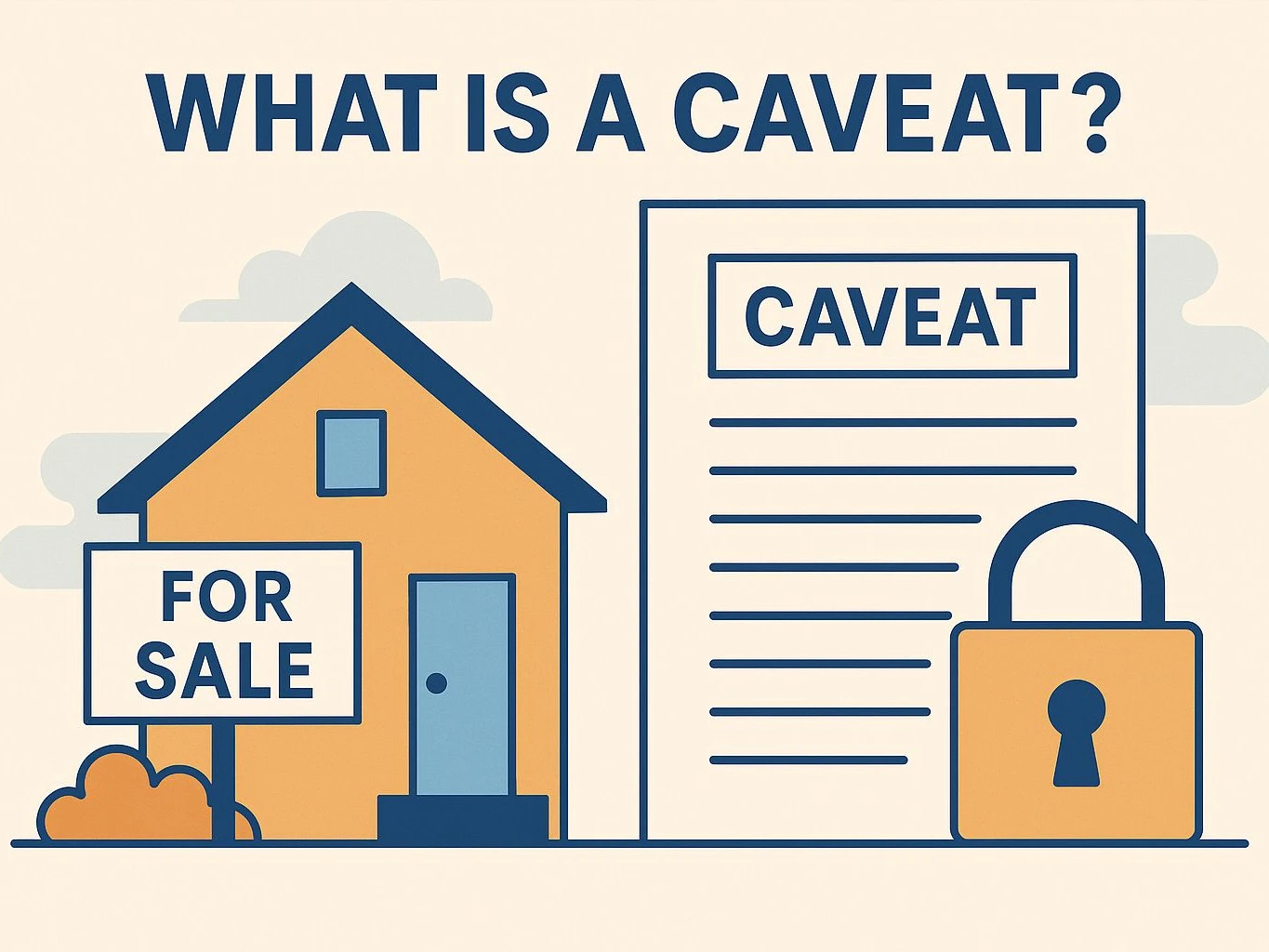
Table of Contents
- What Is a Caveat?
- The Legal Basis in Zimbabwe
- Why Would Someone Place a Caveat?
- What Happens Once a Caveat Is Registered?
- Important: A Caveat Does NOT Mean You Lost Ownership
- Can Anyone Place a Caveat?
- How Long Does a Caveat Last?
- How Do You Remove a Caveat?
- Property Market Impact in Zimbabwe
- Real-World Example
- Property Expert Insight
Property owners are often shocked to discover that their property cannot be sold, transferred, or mortgaged because a caveat has been placed against it.
A Property.co.zw reader asks:
“Someone placed a caveat on my property. What does it mean?”
Understanding caveats is critical because they directly affect ownership rights, transactions, and financing.
What Is a Caveat?
A caveat is a legal notice lodged at the Deeds Registry that:
- warns others that someone claims an interest in the property
- prevents transfer or registration without resolving that claim
In simple terms: A caveat temporarily freezes property transactions until a dispute or legal interest is clarified.
The Legal Basis in Zimbabwe
Caveats are recognised under:
- Deeds Registries Act
- High Court of Zimbabwe
The Deeds Registry allows interested parties to protect their rights before ownership changes occur.
Why Would Someone Place a Caveat?
A caveat is usually lodged when someone believes they have a legal or financial interest in the property.
Common reasons include:
1️. Pending Sale Agreement
A buyer who signed an Agreement of Sale may lodge a caveat to stop the seller from selling to another buyer.
2️. Divorce or Matrimonial Dispute
A spouse may protect their share of a matrimonial home during separation proceedings.
3️. Inheritance or Estate Dispute
Family members may lodge caveats where ownership is contested in a deceased estate.
4️. Debt or Financial Claim
A creditor may seek protection where property forms part of repayment negotiations.
5️. Partnership or Joint Venture Disputes
Where property was jointly financed but registered in one name.
What Happens Once a Caveat Is Registered?
Once lodged at the Deeds Office:
- Property cannot be transferred
- Mortgage bonds cannot be registered
- Sale transactions are halted
The caveat acts as a legal red flag to conveyancers and banks.
Important: A Caveat Does NOT Mean You Lost Ownership
Many owners panic unnecessarily. A caveat:
- does not transfer ownership,
- does not cancel title deeds,
- does not automatically prove the claim is valid.
It simply signals that a dispute or interest must first be resolved.
Can Anyone Place a Caveat?
No. The person lodging the caveat must demonstrate:
- a recognisable legal interest, and
- reasonable grounds for protection.
Frivolous or malicious caveats can be challenged in court.
How Long Does a Caveat Last?
A caveat remains until:
- the claimant withdraws it voluntarily, or
- parties reach settlement, or
- a court orders its removal.
Some caveats stay in place for years if disputes remain unresolved.
How Do You Remove a Caveat?
If a caveat has been placed on your property, you generally have four options:
1. Negotiate Resolution
Most caveats are removed after settlement between parties.
2. Provide Security or Proof
You may demonstrate that the claimant has no legal interest.
3. Court Application
You may approach the High Court of Zimbabwe for:
- cancellation of caveat,
- declaration of ownership rights.
4. Estate Administration Finalisation
In inheritance matters, completion of estate distribution often removes caveats.
Property Market Impact in Zimbabwe
Caveats significantly affect property liquidity. Property.co.zw market observations show:
- Properties with caveats take 3–5× longer to sell.
- Banks often refuse mortgage approval where caveats exist.
- Transactions frequently collapse during conveyancing.
For sellers, unresolved caveats can delay deals for months or even years.
Real-World Example
A homeowner in Borrowdale agrees to sell a house. Before transfer:
- An ex-business partner lodges a caveat claiming financial contribution.
- Conveyancers halt transfer.
- Buyer withdraws due to uncertainty.
Result: Sale fails despite valid ownership.
Property Expert Insight
Caveats are powerful legal tools designed to prevent fraud and protect legitimate interests, but they are also one of the biggest hidden causes of delayed property transactions in Zimbabwe.
The key takeaway:
- A caveat does not take your property away but it can stop you from using or selling it until the dispute is resolved.
- Early negotiation and proper legal advice often save significant time and costs.
DISCLAIMER: This content is provided “as is” without any warranties, express or implied. Nothing herein constitutes legal advice or creates an attorney-client relationship. Independently verify all information and consult a qualified property law attorney for your specific situation.