Continue with Facebook
 Continue with Email


You may have been thinking about buying property for months maybe even years. And now, as the idea begins to feel real, the excitement arrives, quickly followed by questions. Doubts. A quiet nervousness.
That mix of emotions is completely normal.
In Zimbabwe, property decisions carry extra weight. High construction costs, limited access to long-term mortgages, currency volatility, and uneven infrastructure mean buyers and investors must be more deliberate than ever. According to industry estimates, over 70% of residential property purchases are still cash-based, while many investors rely on phased building or incremental development to manage risk.
What helps is not certainty because that rarely exists but clarity. Knowing what to do next, and taking it one step at a time.
Let’s break it down, simply and practically, as you turn property plans into reality.
Get Clear on Why You Are Buying
Before you think about prices, interest rates, or whether “now is the right time,” start with one essential question:
Why are you buying property in the first place?
Are you:
- Looking for a long-term home for your family?
- Securing land as a store of value?
- Building rental units for income?
- Buying for capital growth in an emerging area?
In Zimbabwe, this distinction matters more than most people realise.
A buyer looking for a primary residence may prioritise:
- Proximity to schools and work
- Access to water and electricity
- Security and road infrastructure
An investor, on the other hand, may focus on:
- Rental demand and yield
- Exit potential
- Development density allowances
For example, areas such as Westgate, Borrowdale, and Hillside tend to attract end-users, while Ruwa, Norton, and parts of Gweru have seen growing interest from investors building clusters or rental cottages.
When the why is clear, decisions stop feeling scattered. They start aligning.
Understand Your Numbers (Even If They’re Not Perfect)
You don’t need a flawless spreadsheet to move forward but you do need honesty.
Ask yourself:
- How much can I comfortably afford without strain?
- Am I building in phases or all at once?
- What happens if construction costs rise by 15–20%?
- If this is an investment, how long can I wait before income stabilises?
In 2024, building costs in Zimbabwe rose by an estimated 18–25% year-on-year, driven by imported materials, fuel prices, and currency movements. Ignoring this reality has caused many projects to stall halfway.
For homebuyers, this is about protecting your lifestyle, not stretching it thin.
For investors, it’s about whether the numbers still work outside best-case scenarios.
If a deal only works when everything goes right, it deserves a pause.
Clarity doesn’t eliminate risk it helps you choose which risks are worth taking.
Do Your Homework Slowly and Deliberately
Property rewards patience.
Take time to understand:
- Neighbourhood price trends
- Infrastructure plans and service availability
- Council approvals and zoning
- Comparable sales, not just asking prices
Visit sites more than once. Go at different times of day. Ask questions that feel uncomfortable.
In Zimbabwe, due diligence failures remain one of the leading causes of stalled or disputed property transactions, particularly involving:
- Unserviced stands
- Incomplete subdivisions
- Developments with delayed title
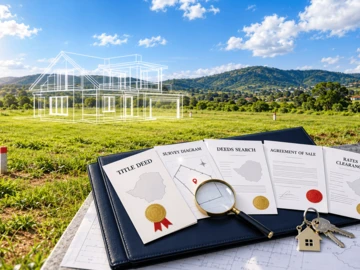
Conduct checks with local authorities and, where necessary, consult the Deeds Registry Zimbabwe to confirm ownership and transferability.
Due diligence is not about suspicion it’s about avoiding regret. Most costly mistakes are caused by rushing, not by missing out.
Accept That There Is No Perfect Timing
This is often the hardest truth.
There is no moment when:
- The currency is fully stable
- Construction costs are low
- Interest rates are ideal
- Everyone agrees on where the market is going
Waiting for certainty often means waiting indefinitely.
Even during periods of economic uncertainty, Zimbabwe’s property market has shown resilience. Residential property remains one of the most trusted stores of value, particularly in urban centres, partly because alternatives are limited.
The goal is not to time the market perfectly.
It is to make decisions that still make sense if:
- Projects take longer
- Costs rise
- Returns grow gradually, not immediately
Good property decisions hold their ground even when conditions change.
Bringing It All Together
Turning property plans into reality is not about bravado or blind confidence.
It is about:
- Clear intent
- Honest numbers
- Patient research
- Measured decision-making
As the year unfolds, opportunities will appear some obvious, others quiet. The buyers and investors who benefit most will not be the fastest or the loudest, but those who move with intention.
Sometimes, the smartest move is not rushing forward.
It is knowing why you are moving at all and building from there.