Continue with Facebook
 Continue with Email

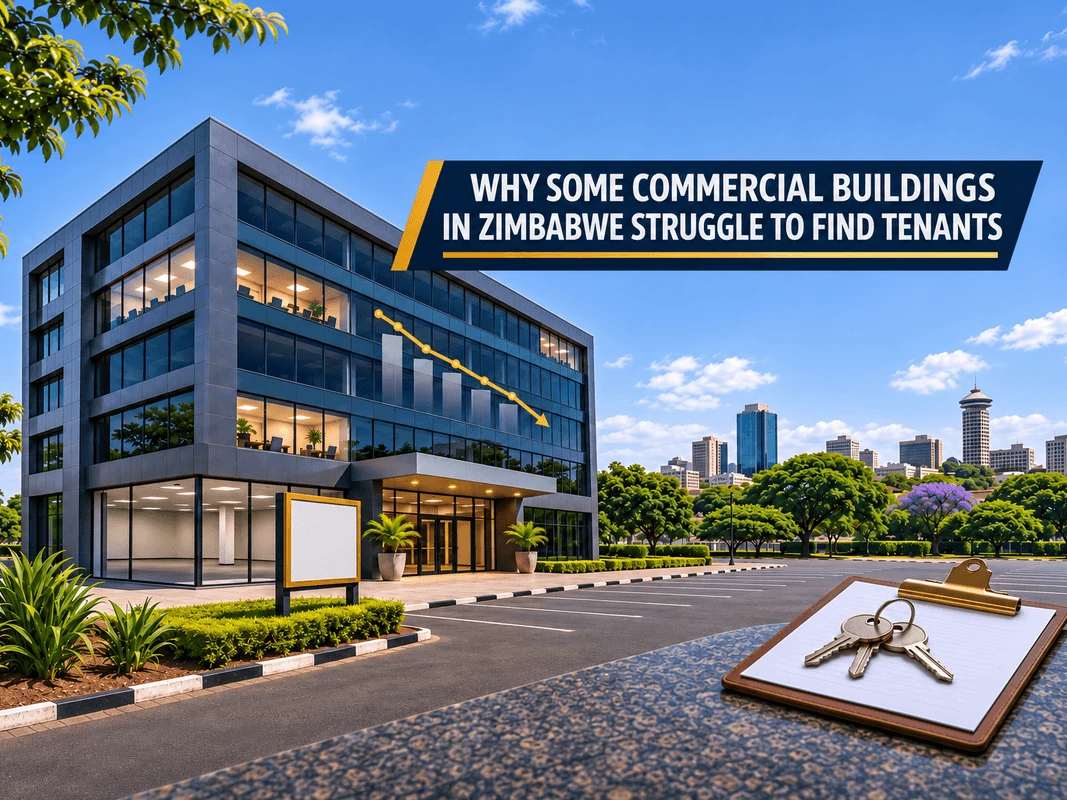
Table of Contents
- What Zimbabwe Property Reports Show
- Ten Reasons Commercial Buildings Struggle to Attract Tenants
- How Tenant Priorities Differ by Property Type
- Why Lower Rent Can Still Mean a Higher Monthly Cost
- Compare the Main Responses Before Spending
- Two Practical Actions for Commercial Property Owners
- Conclusion
A commercial building can have a prominent address, generous floor space and an advertised rent that appears competitive and still remain empty. For a business choosing premises, those features are only part of the decision.
The tenant must also consider whether customers can reach the property, staff can work comfortably, utilities support daily operations and the total cost fits the business. A building that falls short on these requirements can lose tenants to a smaller or more expensive looking alternative.
Some commercial buildings struggle because their location, operating costs, condition, configuration or leasing offer no longer matches the businesses they are trying to attract. Weaker demand in a particular sector can compound the problem. The owner's task is to identify which constraint is preventing occupation before spending on improvements or reducing rent.
What Zimbabwe Property Reports Show
Knight Frank's Zimbabwe Market Update for the second half of 2025 reported office vacancy of approximately 60% in Harare's CBD and 40% in Bulawayo. Its office commentary linked pressure on central buildings to infrastructure deterioration, operating costs, security and congestion. These are dated office market estimates, rather than a November 2026 vacancy measure for all commercial property. Knight Frank Zimbabwe Market Update H2 2025.
First Mutual Properties' 2025 annual report commentary, published in June 2026, also described weak demand for large CBD offices alongside demand for smaller business units. It identified stronger demand in essential services, logistics and neighbourhood retail within its operating environment. First Mutual Properties 2025 annual-report commentary.
The practical implication is that owners need to assess the specific building and tenant segment. An office floor, neighbourhood shop and warehouse can face different demand conditions in the same city.
Ten Reasons Commercial Buildings Struggle to Attract Tenants
1 The Location Does Not Match the Target Tenant
A good location depends on the business using it. A retailer needs access to suitable customers. A professional firm may prioritise client parking and a convenient commute. A distributor needs efficient routes and delivery access.
Problems arise when the owner markets an address without testing how it functions:
- Can customers find and enter the premises easily?
- Is public transport practical for employees?
- Are parking and deliveries workable during business hours?
- Does the surrounding area suit the intended trading hours?
- Are the customers the business needs actually nearby?
A property can remain useful while becoming less suitable for its previous tenant type. The leasing strategy should reflect the businesses that can operate there successfully today.
2 The Total Occupancy Cost Is Too High
Tenants must fund more than the advertised rent. Service charges, parking, utilities, security, backup power and maintenance obligations can materially change affordability.
The initial commitment matters too. Deposits, advance payments, fit out work and moving costs compete with the tenant's working capital.
Owners should provide a clear schedule showing:
- base rent and the basis on which it is calculated
- service charges and what they cover
- applicable taxes and whether quoted amounts include them
- utilities, metering and shared cost allocation
- parking and other separate charges
- deposits, advance payments and fit out responsibilities
An apparently affordable rental can become uncompetitive once these obligations are added. Uncertainty about future charges can also cause a tenant to choose a clearer offer.
3 Power Water and Connectivity Do Not Support the Business
Premises must enable the tenant to trade. A business that depends on refrigeration, online transactions, production equipment or reliable sanitation will assess service continuity closely.
A listing that mentions solar, a generator, water storage or fibre should explain the actual service available. Useful questions include:
- Which circuits and equipment does backup power support?
- How are generator fuel and maintenance costs allocated?
- What water supply and storage arrangements serve the building?
- Which internet providers can connect the unit?
- Who responds when a shared system fails?
An inverter rating or a photograph of a water tank does not answer these operational questions. Owners should document capacity, responsibilities and maintenance arrangements so prospective tenants can assess suitability.
4 The Building Needs Functional Improvements
Leaking roofs, unreliable lifts, poor lighting, damaged toilets, inadequate ventilation and neglected entrances can undermine a viewing before rental negotiations begin.
These defects also raise questions about future disruption and management responsiveness. Painting a reception area will have limited value if essential facilities remain unreliable.
Prioritise work according to its effect on use:
- address safety and serious building defects
- restore essential facilities and access
- improve comfort, lighting and cleanliness
- complete cosmetic upgrades that support the intended positioning
An older building can compete effectively when it is functional and maintained. Its age alone is an incomplete diagnosis of vacancy.
5 The Units Are the Wrong Size or Shape
A large floor may be unsuitable for businesses seeking modest premises, even where the rate per square metre looks attractive. The tenant still pays for space it cannot use productively.
Deep layouts, awkward columns, limited natural light and poorly positioned entrances can also reduce usable space. In industrial premises, loading access, clear height and floor capacity may matter more than the advertised area.
Subdivision may create a better fit, but it requires a feasibility assessment. New units can need separate access, metering, ventilation, sanitation, fire provisions and approvals. Smaller units also mean more leases, accounts and maintenance requests.
Test demand and the cost of compliant alterations before dividing a floor or warehouse.
6 Lease Terms Create Too Much Risk or Upfront Cost
A suitable building can lose a tenant during negotiation. A long commitment, unclear escalation, onerous reinstatement obligation or unaffordable deposit may make the offer impractical.
Review the commercial terms as a complete package:
- lease duration and renewal arrangements
- rent review method and timing
- deposit and advance payment requirements
- repairs, insurance and maintenance responsibilities
- fit out access and any incentive period
- exit, assignment and reinstatement provisions
Flexibility should be priced and documented. A shorter lease or fit out contribution may help secure a suitable tenant, but it also affects the owner's income certainty and costs. Have the agreement drafted or reviewed for the actual arrangement.
7 The Intended Tenants Cannot Support the Economics
Vacancy can reflect weak demand among the businesses being targeted. A retailer with insufficient sales or a company reducing costs may postpone a move regardless of the building's condition.
For a shop, examine whether expected turnover can support the full occupancy cost. For offices, consider the number of workstations actually needed. For industrial premises, test whether the building supports the required production or distribution activity.
The owner can improve the offer, but cannot manufacture a tenant's revenue. If repeated enquiries fail on affordability, revisit the target segment, unit size and pricing together.
8 The Tenant Mix and Surroundings Work Against the Property
A business assesses its neighbours as well as its own unit. Complementary occupiers can encourage visits, while incompatible activities can create noise, loading conflicts, parking pressure or security concerns.
For retail buildings, distinguish general pedestrian traffic from visits by likely customers. A busy pavement does not establish demand for every product or service.
Review:
- which existing occupiers attract relevant customers
- whether vacant frontage weakens the trading environment
- how parking, signage and deliveries are shared
- whether operating hours and activities are compatible
Filling every vacancy quickly can create new retention problems if the incoming uses conflict with established tenants.
9 The Marketing Does Not Answer Tenant Questions
Weak photographs, missing floor plans and vague descriptions make comparison difficult. Slow responses or restricted viewing access can then lose the inquiry.
A useful commercial listing should state the location, available area, rent basis, other charges, access, parking, services, condition and availability date. Show the actual unit and shared facilities, with a floor plan where possible.
On Property.co.zw and other marketing channels, describe the business use the premises can accommodate, subject to the necessary permissions. Explain practical features such as delivery access, a separate entrance or backup power coverage.
Measure what happens after publication. Few enquiries may indicate an exposure, targeting or pricing problem. Many viewings without offers suggest that the physical property or terms need closer examination.
10 Management and Documentation Undermine Confidence
Tenants want a clear contact for repairs, transparent accounts and confidence that they can use the premises as intended.
Unresolved maintenance complaints, unexplained charges or contradictory information about permitted use can deter applicants and encourage existing tenants to leave. Repeated turnover then adds vacancy and reletting costs.
Keep a consistent record of:
- the proposed use and relevant approvals
- building condition and outstanding repairs
- service charge budgets and reconciliations
- maintenance responsibilities and response arrangements
- agreed handover conditions
Where approvals or alterations are needed, establish the process before promising an occupation date. Clear documentation helps both parties understand what is being offered.
How Tenant Priorities Differ by Property Type
| Property type | What the occupier needs to assess | A common mismatch to investigate |
|---|---|---|
| Offices | Access, connectivity, utilities, comfort, usable layout and client facilities | A large or inefficient floor offered to businesses seeking smaller premises |
| Retail premises | Suitable customers, visibility, trading costs, deliveries and complementary neighbours | High asking rent supported by general traffic rather than likely sales |
| Industrial and warehouse premises | Power, loading, yard access, clear height, floor capacity and permitted activity | Adequate floor area with unsuitable operational specifications |
Use the requirements of the intended business to assess the property. A successful office improvement may offer little benefit to a warehouse occupier.
Why Lower Rent Can Still Mean a Higher Monthly Cost
Consider two hypothetical premises of 200m². The following assumptions illustrate a comparison; they are not Zimbabwean market quotations.
| Monthly cost | Building A | Building B |
|---|---|---|
| Base rent | US$1,000 | US$1,400 |
| Service charge | US$300 | US$200 |
| Tenant's additional power and water provision | US$350 | US$100 |
| Parking | US$100 | US$0 |
| Modelled monthly subtotal | US$1,750 | US$1,700 |
Building A advertises the lower rent but costs US$50 more per month across the modelled items. Over 12 months, that difference is US$600.
The comparison excludes taxes, fit out, deposits, financing, escalation and other unlisted costs. In practice, identify what each charge includes so shared services are not counted twice. Assess upfront cash requirements separately from recurring expenses.
Compare the Main Responses Before Spending
| Owner response | Potential benefit | Main cost or risk | Best supported when |
|---|---|---|---|
| Adjust rent or incentives | Brings the offer closer to tenant budgets | Reduces income and may leave physical defects unresolved | Comparable premises and lost enquiries show a pricing gap |
| Improve services and condition | Removes documented operational objections | Capital outlay, disruption and ongoing maintenance | Prospective tenants repeatedly identify the same remediable defects |
| Reconfigure units | Matches demand for a different size or layout | Alteration costs, approvals and more intensive management | Enquiries demonstrate demand at rents that justify the work |
| Change the target use or tenant segment | Opens a more suitable market | Different approvals, specifications and leasing costs may be required | The proposed use is feasible and supported by local demand |
A major refurbishment should have a cost business case. Compare expected collected income after expenses with the capital required, downtime and risk of further vacancy. New finishes alone do not establish that a project will pay for itself.
Two Practical Actions for Commercial Property Owners
1 Complete a Vacancy Diagnostic Before Changing the Rent
Ask the managing agent to review recent enquiries, viewing feedback, competing buildings, lost negotiations and departing tenants' reasons. Inspect the property as a prospective occupier would.
Record each constraint, the evidence supporting it, the proposed remedy and its cost. Separate issues the owner can address such as repairs, layout and terms from wider location or sector conditions.
For example, repeated requests for smaller units justify testing a subdivision proposal. Repeated objections to generator costs justify examining the energy package. Few enquiries without reliable exposure data provide little basis for choosing either response.
2 Run a Measurable Leasing and Retention Programme
Set a review period and assign responsibility for the agreed changes. Track enquiries, response time, viewings, offers, signed leases, days vacant and reasons for rejection. Include maintenance performance and renewal discussions for existing tenants.
Assess financial results alongside occupancy:
- Physical occupancy: occupied lettable area divided by total lettable area, using a consistent reporting basis.
- Rent collection: payments received against the relevant amounts due, with arrears identified separately.
- Income after concessions: the effect of rent free periods, fit out contributions and other incentives.
- Net property income: income after the relevant property operating expenses.
An occupied building still needs tenants who can pay and an operating budget that works. Set clear conditions for changing course if enquiries, lease conversions or collected income fail to improve.
Conclusion
Commercial buildings attract tenants when the premises and lease support the occupier's business at an affordable total cost. Persistent vacancy calls for a specific diagnosis of location, services, condition, layout, terms and demand.
- Owners of older office buildings: Test functionality, unit sizes and tenant feedback before committing to a broad refurbishment.
- Retail landlords: Assess customer suitability, tenant mix and trading economics alongside footfall.
- Industrial owners: Match technical specifications and access to the intended operation.
- Portfolio and diaspora investors: Require reports on vacancy, collections, maintenance and leasing progress.
Begin with the barrier tenants are actually encountering. Fund and measure the remedy, then judge success through sustainable occupation and collected income.