Continue with Facebook
 Continue with Email


Table of Contents
Zimbabwe’s property development sector is undergoing a profound transformation. With a housing backlog estimated at 1.25 million to 1.5 million units, developers are under growing pressure to deliver scalable housing while absorbing significant infrastructure costs. At the same time, private and public players are drawing inspiration from successful regional models to unlock new opportunities.
Where We Are Now
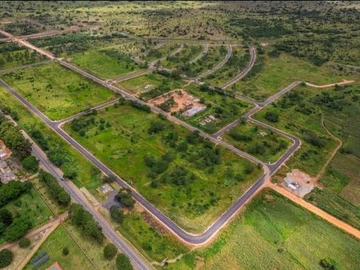
Today, development is largely driven by the private sector. Developers are often required to fund not just the building, but roads, water systems, power backup, and sewage infrastructure. These “off-site” infrastructure costs can reach US$10,000–15,000 per unit, plus another US$5,000–8,000 for water and electrical upgrades, driving up final property prices.
Simultaneously, Zimbabwe’s housing deficit remains serious. While different sources report between 1.25 million and 2 million units needed, the government itself recently reaffirmed the scale of the challenge. The Ministry of National Housing has set a target of 1 million new housing units by 2025, backed by partnerships with the private sector.
Comparing Costs and Policy: Zimbabwe vs South Africa
Development Costs:
- In Zimbabwe, high infrastructure costs push total development expenses to US$15,000–23,000 per unit for serviced housing, excluding land acquisition and profit margins.
- By contrast, South African developments often benefit from government-subsidized infrastructure, lowering private developer costs to roughly US$10,000–15,000 per unit in social or affordable housing schemes.
Government Policy & Support:
- Zimbabwe relies heavily on public-private partnerships, but regulatory hurdles and fragmented permitting increase both timelines and risk. The Presidential Title Deeds Programme aims to formalize 1.5 million property titles, creating more secure ownership.
- South Africa implements structured housing policy, including social housing agencies, tax incentives, and municipal support for infrastructure provision, effectively reducing risk for developers and encouraging denser, mixed-use developments.
Market Implications:
- Zimbabwean developers must build infrastructure upfront, which contributes to higher property prices, particularly for first-time buyers. Average residential stands in emerging suburbs cost US$15,000–25,000, while fully built three-bedroom homes fetch US$45,000–70,000.
- South African developers can leverage policy support to deliver more affordable housing, with lower upfront costs and faster project timelines.
Banks Entering the Development Space
An emerging trend in Zimbabwe is banks actively financing property development projects, reflecting the perception of real estate as a safe investment and a hedge against currency volatility. With inflation and currency fluctuations affecting other asset classes, property has become a preferred store of value, attracting both institutional and retail investors.
- Several commercial banks are offering construction finance and project loans, sometimes partnering directly with developers to fund infrastructure-heavy projects.
- Mortgage-backed lending is also increasing, with banks targeting diaspora and local investors seeking secure, USD-denominated assets.
- Banks are beginning to view real estate as a strategic investment portfolio, not just a lending product, often taking equity stakes in developments in exchange for funding, particularly in mixed-use and cluster housing projects.
This trend reduces developers’ reliance solely on private equity and mitigates risk, while giving banks exposure to high-demand assets in a market with residential yields averaging 5–7% in prime suburbs and land appreciation rates of 15–20% annually in growth corridors.
Lessons from the Region
Mixed-use precincts combining residential, retail, and community spaces have become core models in South Africa. Major firms are investing billions of rand into precincts to capitalize on integrated living. Zimbabwean developers and banks can adopt similar approaches, particularly around mixed-use, sustainable, and phased developments to manage costs and risk.
The Road Ahead: Key Opportunities
There is strong opportunity on the horizon for developers who can innovate and scale smartly:
- Phased & Modular Development: Reduces upfront risk and enables more affordable options.
- Green Building: Solar power, rainwater harvesting, and modern materials reduce long-term costs.
- Diaspora Investment: Overseas Zimbabweans provide a strong capital source for transparent, well-marketed projects.
- Policy Reform: Streamlined permitting, tax incentives, and shared infrastructure costs could unlock a surge in development.
- Institutional Collaboration: Public-private partnerships and bank participation help share risk and reward, especially in infrastructure-heavy projects.
In Conclusion
Zimbabwe’s developers and financial institutions are navigating high costs, regulatory challenges, and a deep housing deficit, but the sector holds enormous potential. By learning from regional peers, embracing innovation, and collaborating with government and banks, developers can reshape Zimbabwe’s cities, turning unmet demand into a sustainable, modern real estate landscape.