Continue with Facebook
 Continue with Email

Choosing between a cluster development and a standalone home is a key decision for homeowners and investors in Zimbabwe. Each offers unique advantages in terms of security, amenities, cost, and lifestyle.
This guide explores the benefits of both options, investment potential, and real-life examples to help buyers make informed decisions in 2026.
What Are Cluster Developments?
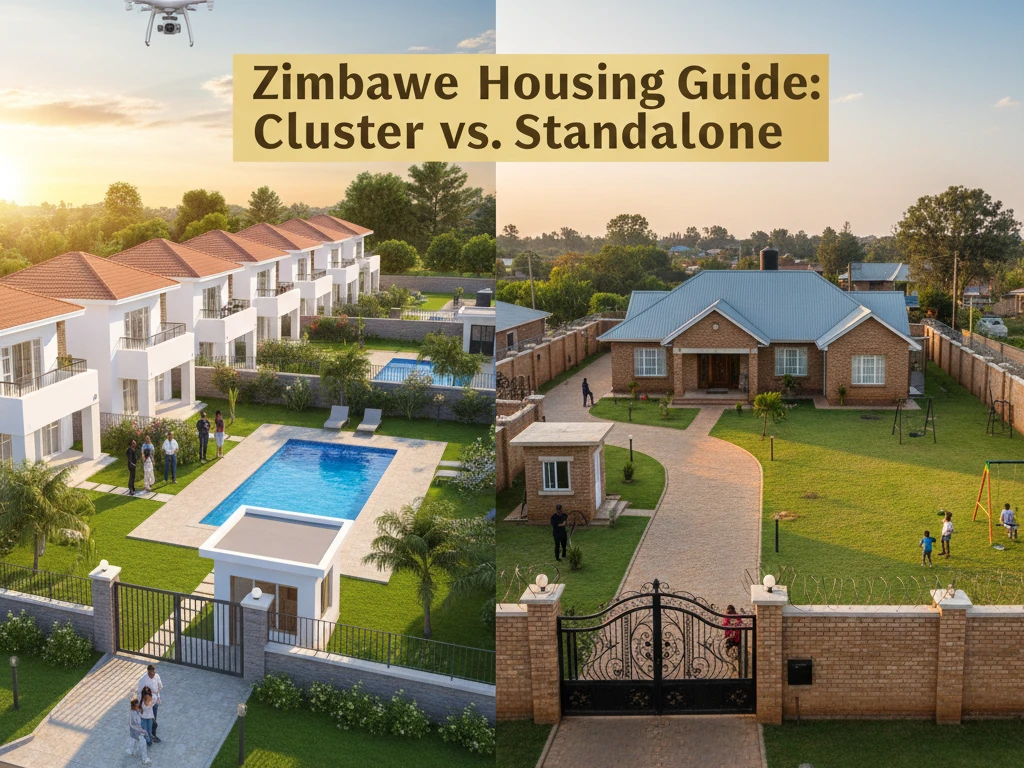
Cluster developments are planned residential communities with multiple homes on shared land, often with gated security and communal amenities.
Key features include:
- Shared security and access control.
- Communal gardens, parks, or recreational facilities.
- Maintenance services for common areas.
Standalone homes, on the other hand, are independent properties on private land with complete autonomy.
Benefits of Living in Cluster Developments
1. Enhanced Security
- Gated entrances and shared security reduce crime risk.
- Controlled access ensures safety for families and tenants.
Stat: Homes in Harare cluster developments report 30–40% lower burglary rates compared to standalone properties in similar suburbs.
2. Shared Amenities
- Parks, pools, gyms, and community halls improve lifestyle.
- Cost of maintenance is shared among residents, making amenities more affordable.
3. Community Living
- Cluster developments foster social interaction, networking, and neighborhood cohesion.
- Ideal for families, retirees, and expatriates seeking supportive environments.
4. Maintenance and Upkeep
- Common areas are professionally managed.
- Residents enjoy cleaner streets and well-kept communal spaces.
Example: A cluster development in Borrowdale West includes a shared swimming pool and playground. Homeowners pay US$50/month for maintenance, enjoying higher property satisfaction and consistent value retention.
Benefits of Living in Standalone Homes
1. Complete Privacy and Autonomy
- Homeowners control design, landscaping, and renovations.
- No shared decision-making with neighbors.
2. Larger Plot Sizes
- Standalone homes typically offer more land for gardens, pools, or expansions.
- Ideal for families who value outdoor space and privacy.
3. Potential for Higher Appreciation
- Prime standalone homes in sought-after suburbs often appreciate faster due to scarcity of large plots.
4. Customization Freedom
- Owners can remodel, build extensions, or add amenities without community restrictions.
Example: A standalone home in Mount Pleasant with a large garden sold for US$250,000 in 2024, appreciating 25% over three years due to its unique features and private location.
Key Factors to Consider When Choosing
- Security Needs – Cluster developments provide built-in security, standalone homes may require private solutions.
- Lifestyle Preferences – Families may prefer shared amenities and community spaces; privacy seekers may prefer standalone plots.
- Maintenance Responsibility – Cluster homeowners share upkeep costs; standalone homeowners manage their own.
- Investment Goals – Cluster developments offer steady rental yields; standalone homes can provide higher long-term appreciation.
Real-Life Example
A young couple in Harare invested in a cluster home in Greendale:
- Enjoyed shared security and a communal gym.
- Paid US$60/month maintenance fees.
- Property value appreciated 18% in two years, with consistent rental demand.
Conversely, a family purchased a standalone home in Mount Pleasant:
- Customized the property with a private pool and garden.
- Sold three years later for US$40,000 above purchase price, highlighting long-term appreciation potential.
Conclusion
Choosing between cluster developments and standalone homes depends on lifestyle, security preferences, and investment goals:
- Cluster developments are ideal for security, community living, and shared amenities.
- Standalone homes provide privacy, larger plots, and higher customization potential.
Understanding these benefits allows homeowners and investors to make informed decisions for 2026 and beyond.